.png)
Connection Before Correction: Understanding Toddler Behavior and Guiding with Respect

By Disha Bonner, M.Ed. | Author, Montessori Teacher Trainer & Consultant, Certified Redirecting Children's Behavior Specialist

When a toddler throws a tantrum, hits a classmate, or flat-out refuses to follow directions, our first instinct is often to correct the behavior immediately. But what if the correction isn't actually what the child needs most in that moment? What if what they're really asking for — through every outburst and meltdown — is connection?
That's the heart of the Connection Before Correction approach: understanding that toddler behavior is not just something to manage, but something to understand. When we shift our lens from "how do I stop this?" to "what is this child trying to tell me?", everything changes.
First, Understand Where Toddlers Are Developmentally
Montessori philosophy describes human development in four broad stages, called the Four Planes of Development.

Toddlers fall squarely in the First Plane (ages 0–6), the stage of physical independence. Their guiding cry: "Teach me to do it myself."
This first plane is focused on movement, language, and order — and the environment plays a crucial role in supporting that growth. This isn't just an educational philosophy; it's a map for understanding why toddlers behave the way they do. They are not being "bad." They are being developmental.
Creating a Supportive Environment Through Positive Discipline
Understanding development is step one. Creating an environment that supports that development is step two. Positive discipline isn't about permissiveness — it's about structure, respect, and connection.

Establish a daily routine. Predictability is calming. When children know what comes next, they feel safe and are less likely to act out.
Offer choices. "Do you want the apple or the banana?" gives a toddler a sense of control within limits you set. This small act of autonomy dramatically reduces power struggles.
Use redirection instead of constant "no." Rather than repeatedly saying no, guide the child toward what is acceptable. "We don't throw blocks — but you can roll them on the floor."
Encourage language. Help toddlers name their feelings. Model phrases like "I feel frustrated" or "I need help." The more words they have for their inner world, the less they need to use their bodies to express it.
Use a Peace Corner, not a punishment corner. A Peace Corner is a calm, inviting space where a child can go to regulate — not to be isolated or shamed. It's a tool for co-regulation, not punishment.

The Prepared Environment: Design That Reduces Behavior Issues
The physical space matters more than most people realize. A thoughtfully prepared environment can reduce frustration-based tantrums by as much as 60% and increase cooperation and independence by up to 75%.
Here's what that looks like in practice:
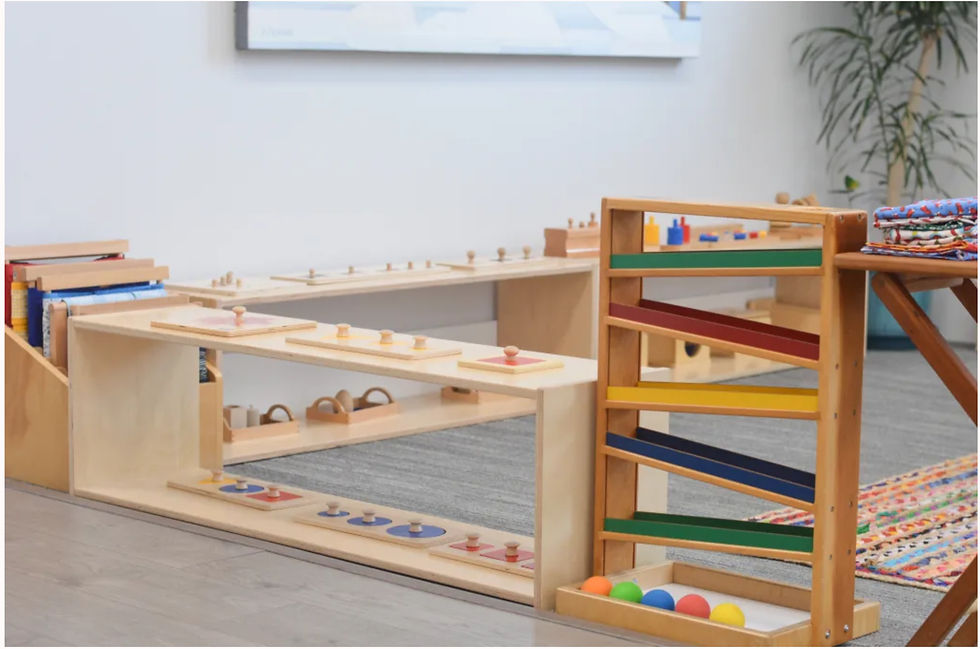
Child-sized and accessible. Furniture, materials, and supplies should be at the child's level. When children can reach things themselves, frustration drops.
Safe and uncluttered. Materials should be clean, complete, and free from clutter. Overwhelm invites chaos.
Organized and predictable. Materials should always be returned to the same spot. A picture of the shelf can serve as a visual guide — helping children restore order on their own.
Visual supports. Picture schedules, step-by-step visual guides for routines like washing hands or using the toilet, and emotion charts in the Peace Corner all help children understand expectations without relying entirely on adult narration.
How to Communicate with Toddlers
Effective communication with toddlers rests on five principles:
1. Clarity. Keep rules simple and few. "We are kind to each other." "We use our words, not our hands." Clear, consistent expectations are far more effective than a long list of rules.
2. With love. Get down to their level — literally. Crouch to their height, use a firm but warm voice, and cross the room rather than raising your voice. Manage your own emotional state first. You cannot co-regulate a dysregulated child if you are dysregulated yourself.
3. With reason. Always explain the why behind limits. "I can't let you hit me. My body deserves to be safe. But you can hit this pillow." Children are more cooperative when they understand the reasoning behind boundaries.
4. With age and ability in mind. The amount of freedom and limit-setting should match where the child actually is — not where we wish they were. As children grow and demonstrate more responsibility, limits can expand accordingly.
5. Working together. People of all ages feel better when they have some autonomy. Collaborate with children to find solutions that work for both of you. This avoids the cycle of nagging, resistance, and repeated correction.
Mistaken Goals: What's Really Behind the Behavior
One of the most transformative frameworks for understanding toddler behavior comes from Positive Discipline: the concept of mistaken goals.
The core idea is this: children misbehave when they feel they don't belong. Their challenging behavior is not the real problem — it's a code for a deeper, unmet need. Once you decode it, you can actually address what's driving the behavior.
There are four mistaken goals, each triggered by how the behavior makes the caregiver feel:
1. Undue Attention ("Notice me / Keep you busy") The toddler whines, interrupts, or acts silly — not because they're trying to annoy you, but because they want to feel special and seen. Your response: Ignore minor attention-seeking. Give positive attention proactively. Offer choices.
2. Misguided Power ("You can't make me") The toddler digs in, has tantrums, or flatly refuses. They feel powerless and are trying to reclaim some control. Your response: Don't engage in power struggles. Offer limited choices. Encourage independence within structure.
3. Revenge ("I'll hurt you back") The toddler hits, breaks things, or says something hurtful — because they feel hurt or rejected and want to feel "even." Your response: Validate their feelings without accepting the behavior. Avoid retaliating. Focus on rebuilding the relationship.
4. Assumed Inadequacy ("Give up on me") The toddler seems helpless, refuses to try, or shuts down entirely. They expect to fail and are protecting themselves from that experience. Your response: Break tasks into tiny steps. Celebrate any effort. Show unwavering faith in their abilities.
Correcting Mistaken Goals in Practice
When correction is needed, match your approach to the underlying goal:
For attention-seeking: redirect and provide attention for positive behavior; schedule regular "special time" one-on-one.
For power struggles: avoid the fight altogether; offer limited but real choices; invite the child to help with a task.
For revenge-driven behavior: don't take it personally; validate feelings; rebuild the connection without accepting the harmful behavior.
For assumed inadequacy: skip the pity; break things into smaller steps; focus on effort and small wins rather than perfection.
And across all of it, remember these general principles: establish consistent routines; replace "no" with what the child can do; model empathy by naming feelings out loud; apply logical consequences that relate to the actual behavior.
A Final Thought
Dr. Maria Montessori wrote: "The first two years are important forever, because in that period, one passes from being nothing into being something."
That passage — from nothing to something — is miraculous. And it is also, frankly, a lot. Toddlers are doing the most intense developmental work of their lives, largely without the language to explain it. Their behavior is their language.
When we learn to read it — with curiosity instead of frustration, with connection before correction — we become not just managers of behavior, but partners in one of the most extraordinary journeys a human being will ever take.
Disha Bonner, M.Ed., is an author, Montessori Teacher Trainer & Consultant, and Certified Redirecting Children's Behavior Specialist.


Comments